
Classic Games · Anderssen vs. Dufresne · 1852
The Evergreen Game
A pawn gambit, a knight sacrifice, a rook sacrifice, a queen sacrifice—and a bishop delivering one of chess history's most admired checkmates.
The story
Beauty before perfection
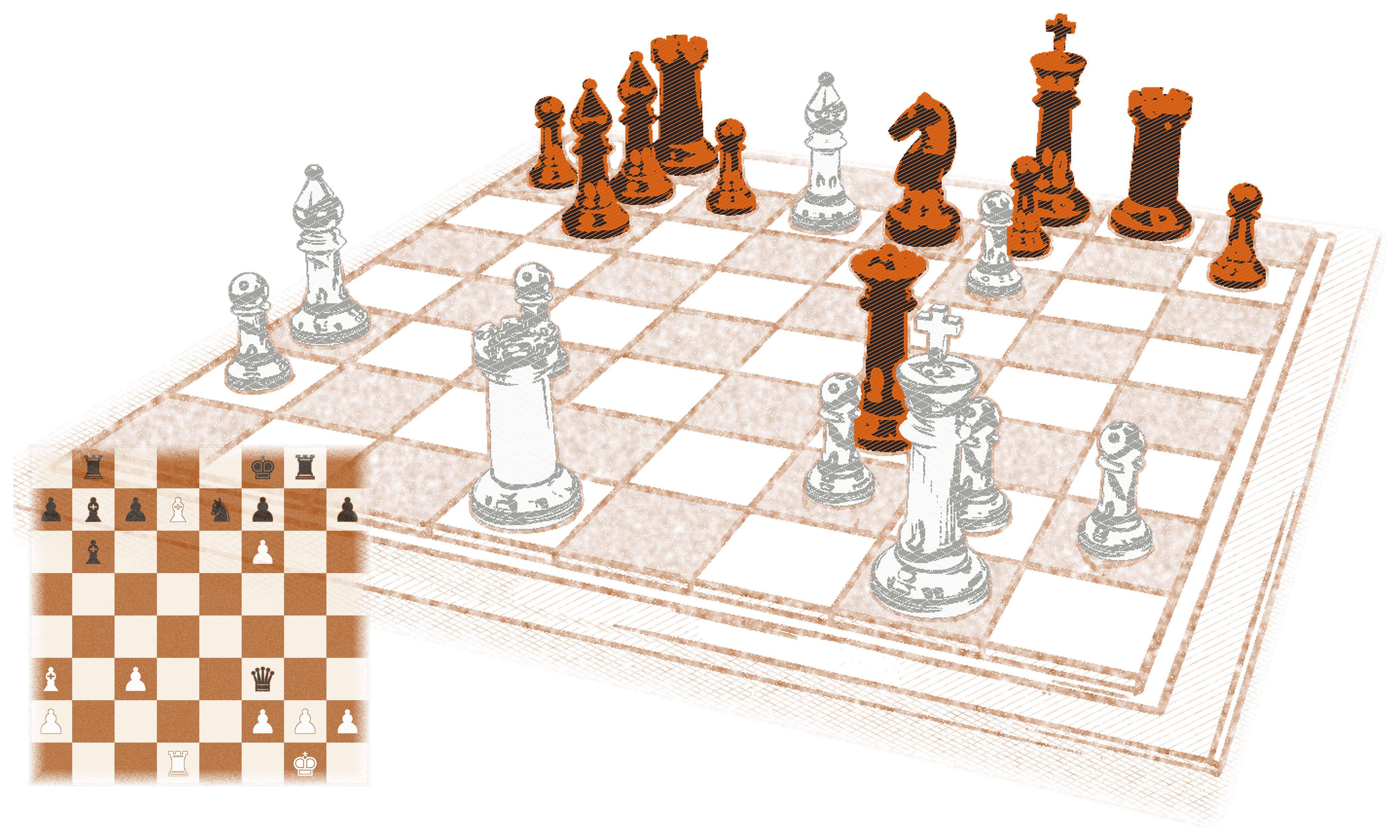
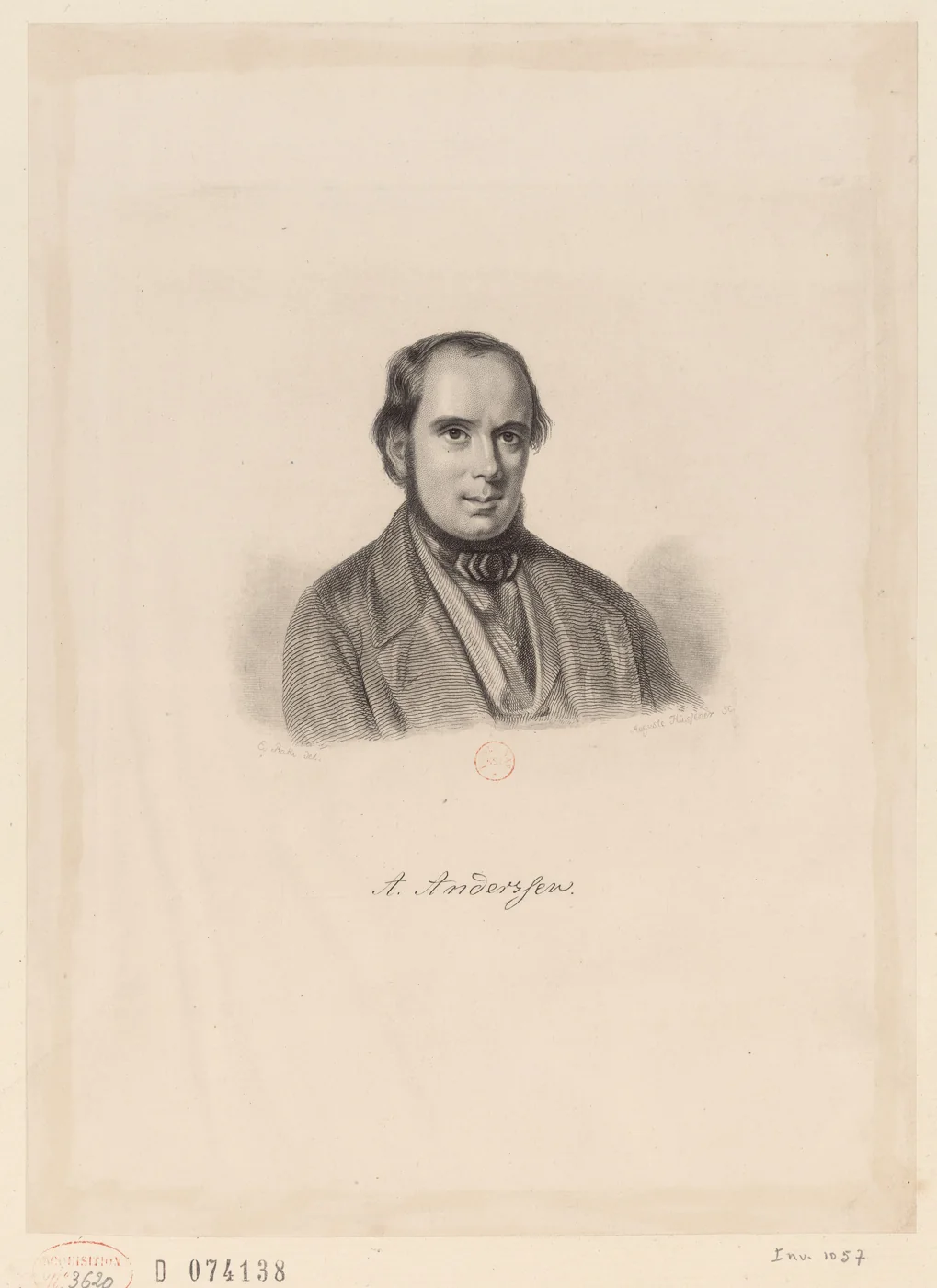
Adolf Anderssen entered the 1850s as the most celebrated attacking player in Europe. He had won the great London tournament of 1851, years before an official world championship existed. Jean Dufresne was a respected player, author, and popularizer of the game.
Their encounter began with the Evans Gambit, the Romantic era's ideal opening: White gives up a pawn to develop quickly and attack before Black can make the extra material count. Anderssen's pieces gathered around the uncastled black king, but the combination was not flawless. Modern analysis finds defenses for Black and questions 17. Nf6+. Its beauty lies not in computer-perfect play, but in the extraordinary coordination of the finish.
The name came later. In an 1879 tribute after Anderssen's death, Wilhelm Steinitz praised 19. Rad1 as “an evergreen in the laurel crown” of the departed master. The description endured because the final combination still feels fresh: every surviving white piece has a role.
Eight exact positions
How the game unfolded
Each board below is reconstructed from the published move score. White begins at the bottom; coordinates appear around every diagram.
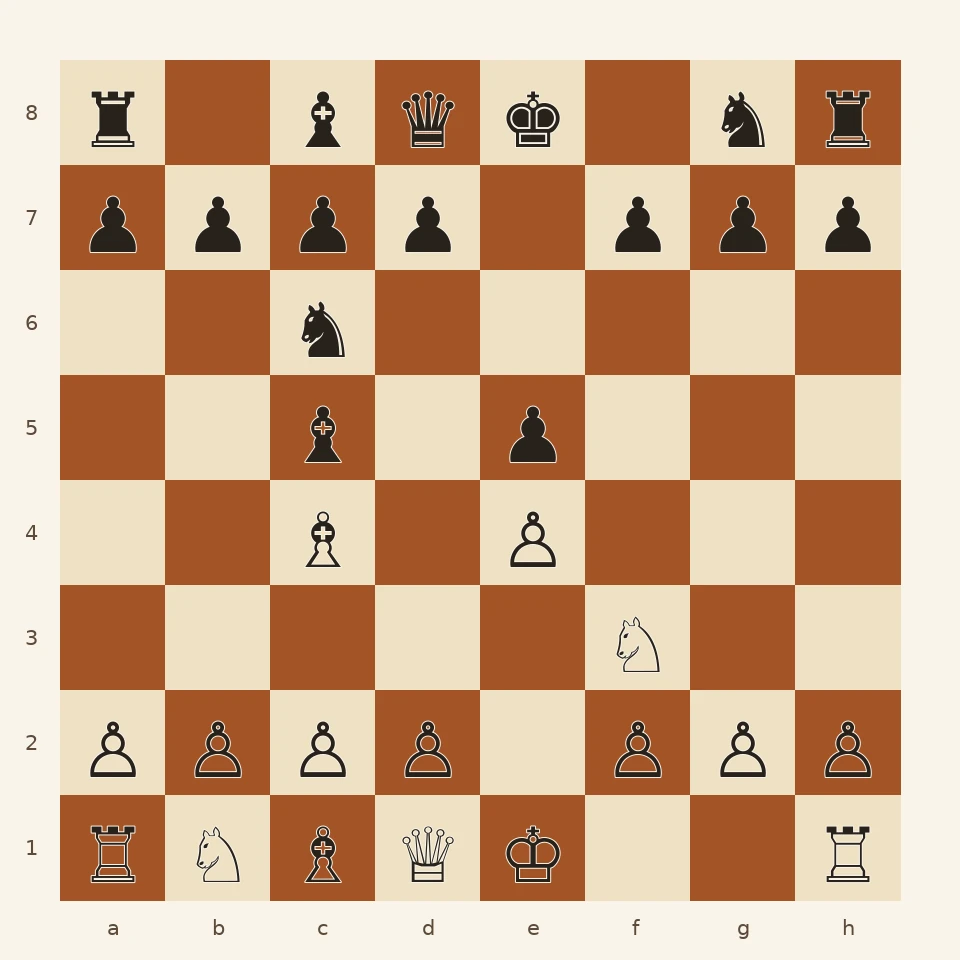
Position 1 · Before 4. b4
The Evans Gambit
White to move
Anderssen offers his b-pawn to pull Black's bishop away and buy time for rapid development. The gambit defines the game: material is negotiable; initiative is not.
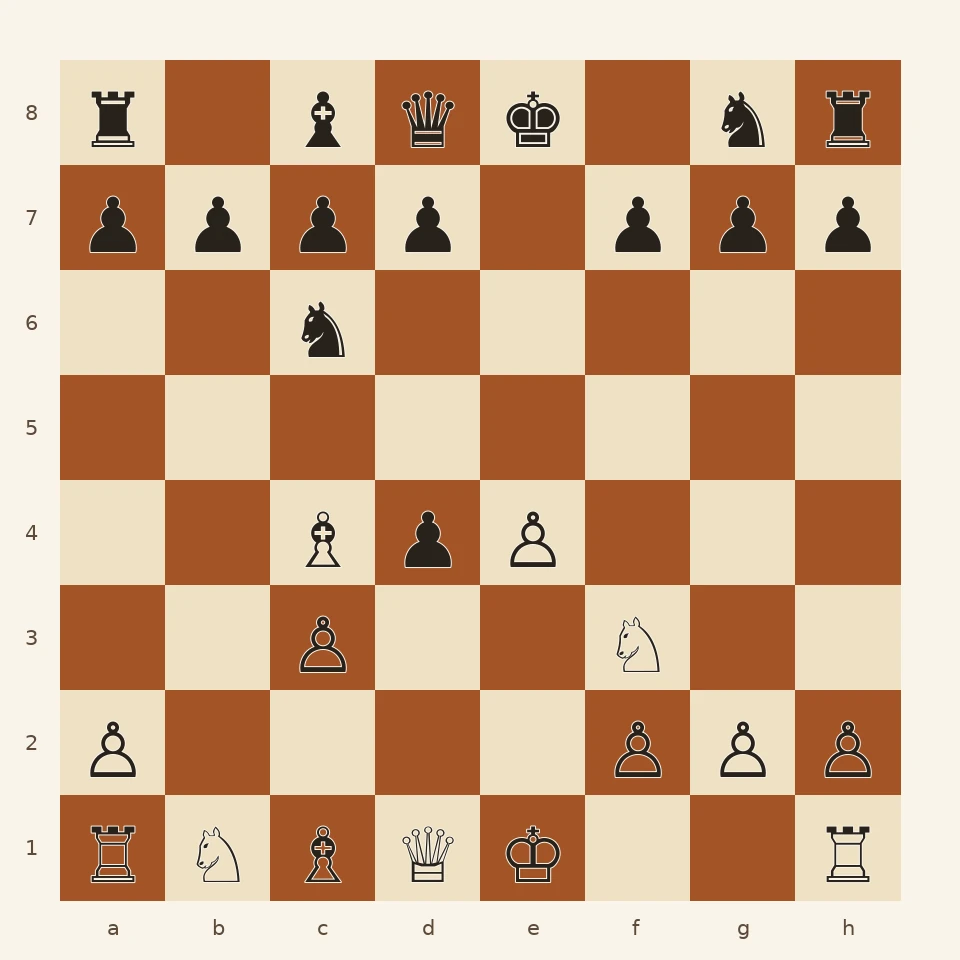
Position 2 · Before 7...d3
Black keeps the extra pawn
Black to move
Dufresne advances the captured pawn to d3. White has castled and is ready to develop with tempo; Black's king remains in the center.
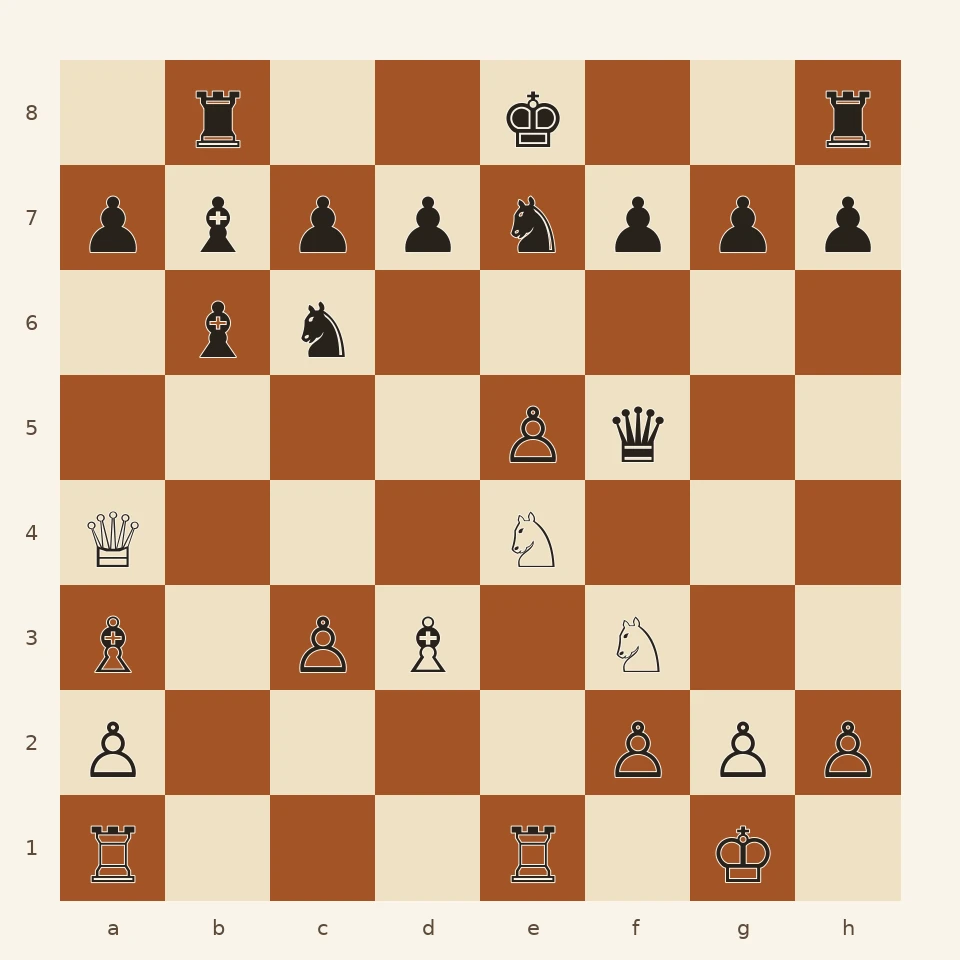
Position 3 · Before 17. Nf6+
The attack becomes concrete
White to move
17. Nf6+ invites 17...gxf6 and tears open the kingside. Modern analysis does not consider the sacrifice objectively best, but it creates the position that made the game immortal.
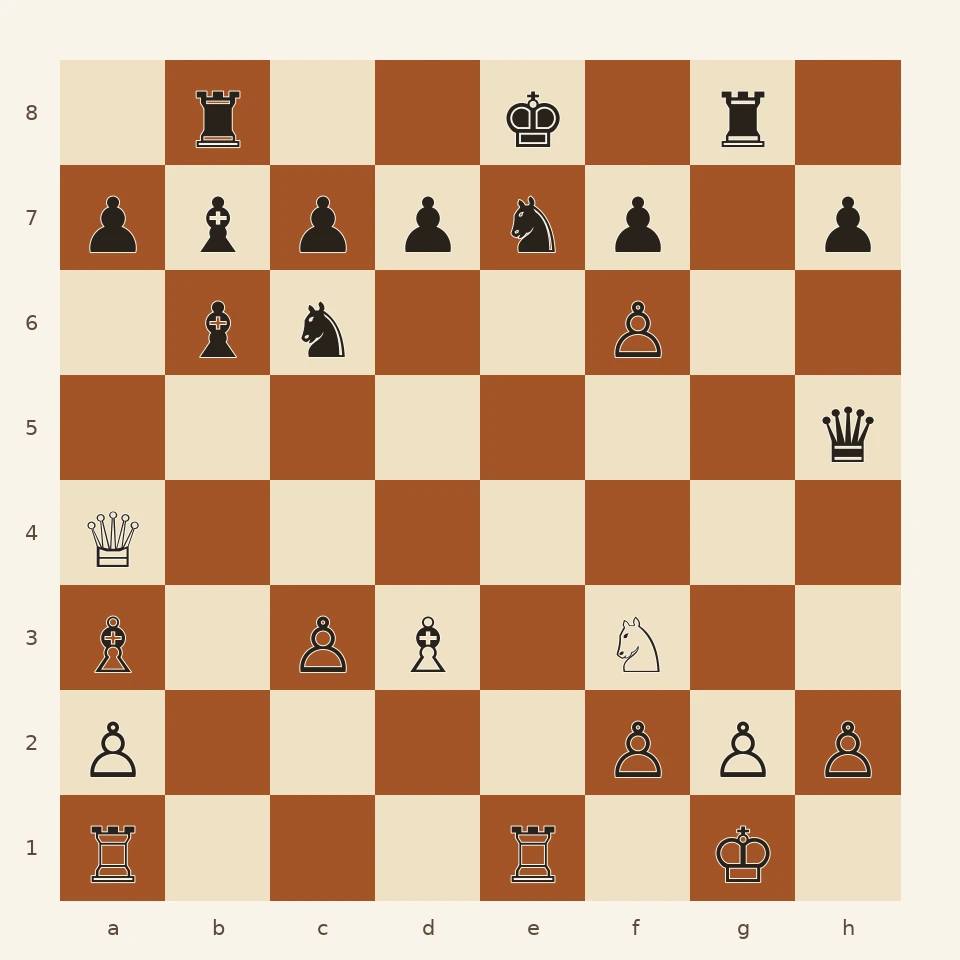
Position 4 · Before 19. Rad1
The quiet move
White to move
Instead of checking, Anderssen brings his last inactive rook to the open d-file. Steinitz later singled out 19. Rad1 as an evergreen in Anderssen's laurel crown.
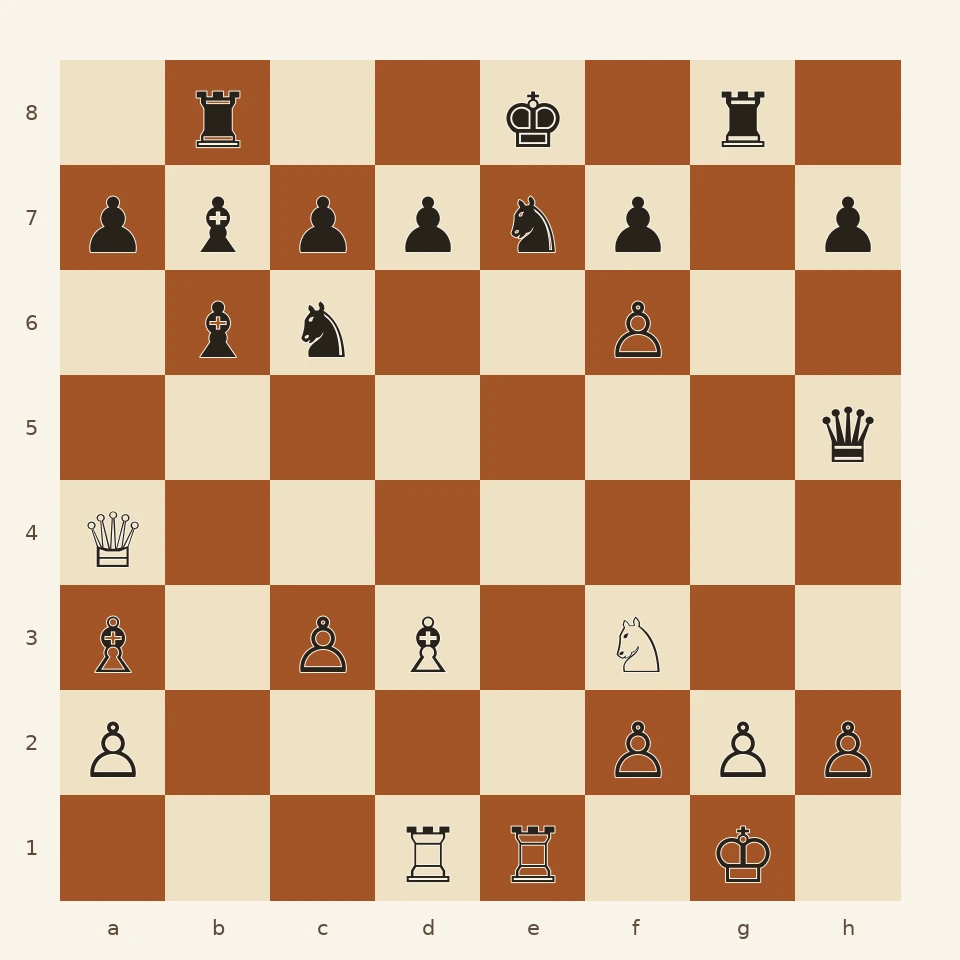
Position 5 · Before 19...Qxf3
Black takes the bait
Black to move
Dufresne takes the knight and threatens mate on g2. The capture looks dangerous, but it leaves Black unable to survive the forcing sequence that follows. Better defenses existed.
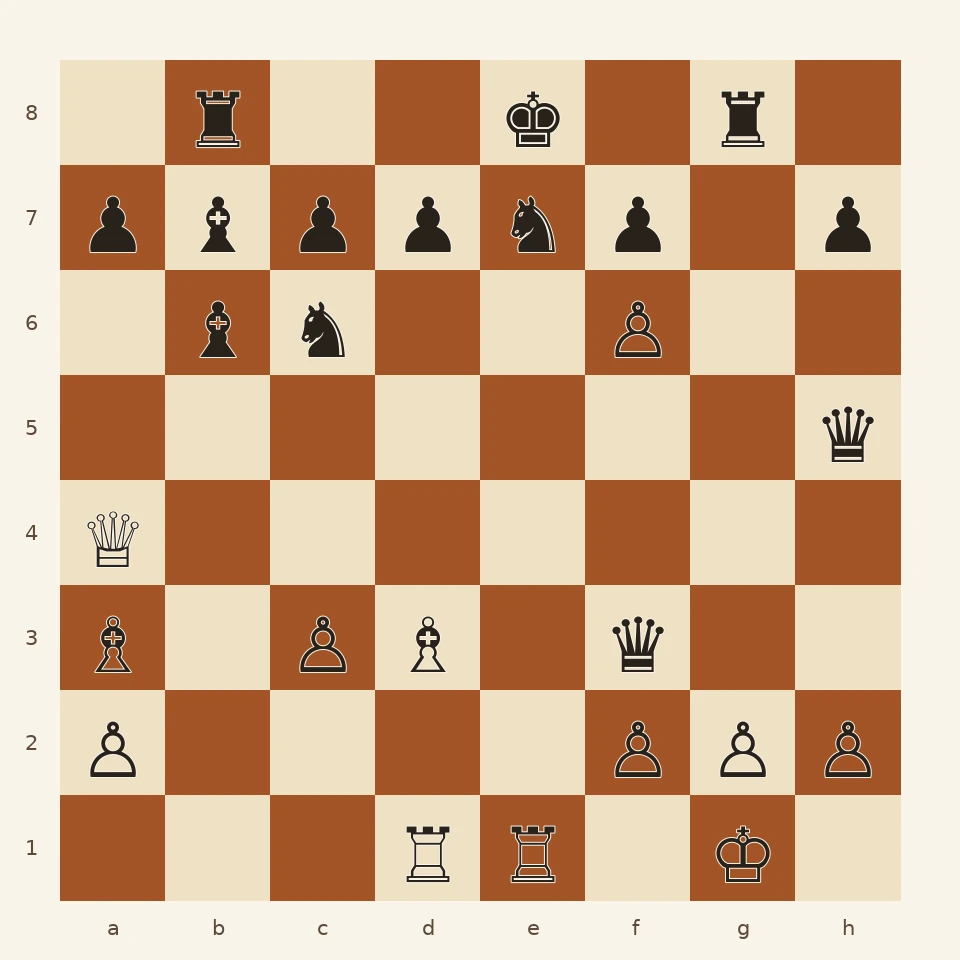
Position 6 · Before 20. Rxe7+
The rook goes first
White to move
20. Rxe7+ forces the knight to capture. Anderssen is not collecting material; every move is opening a line or taking a square from the king.
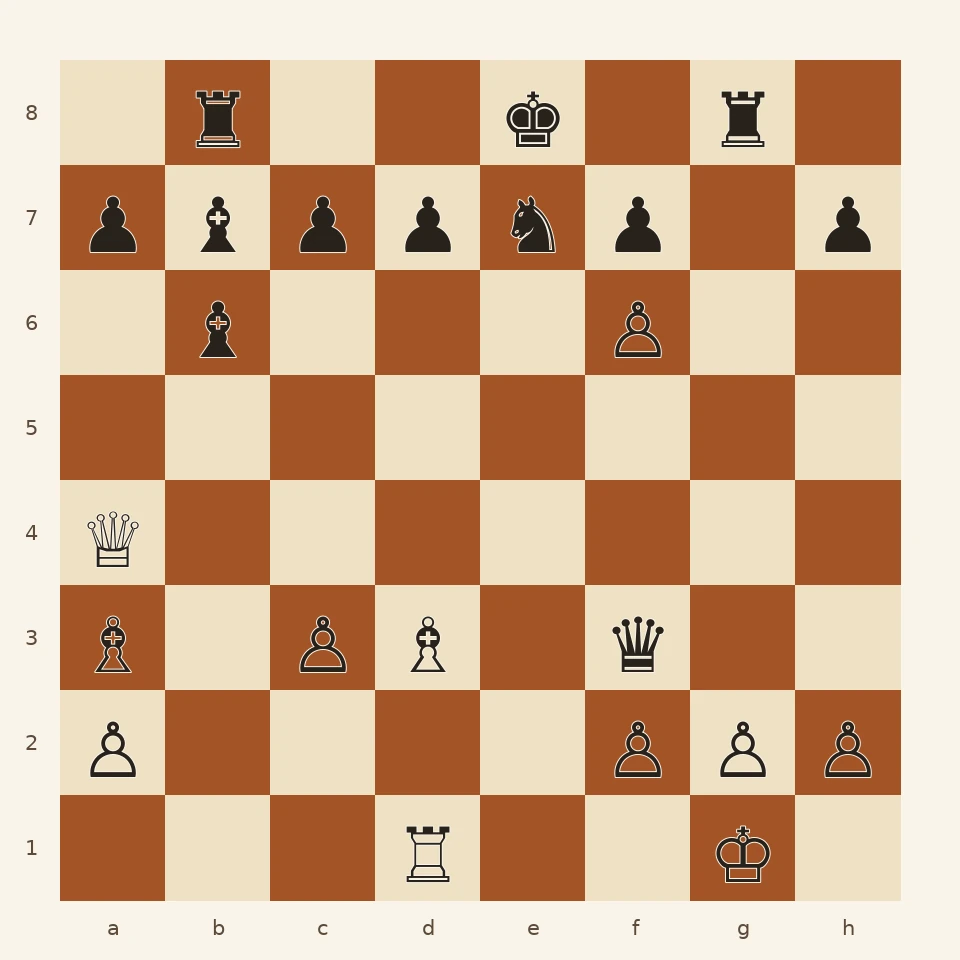
Position 7 · Before 21. Qxd7+
The queen follows
White to move
21. Qxd7+ forces 21...Kxd7. The queen disappears, but the rook on d1 and bishops on a3 and d3 now control the king's route with remarkable precision.
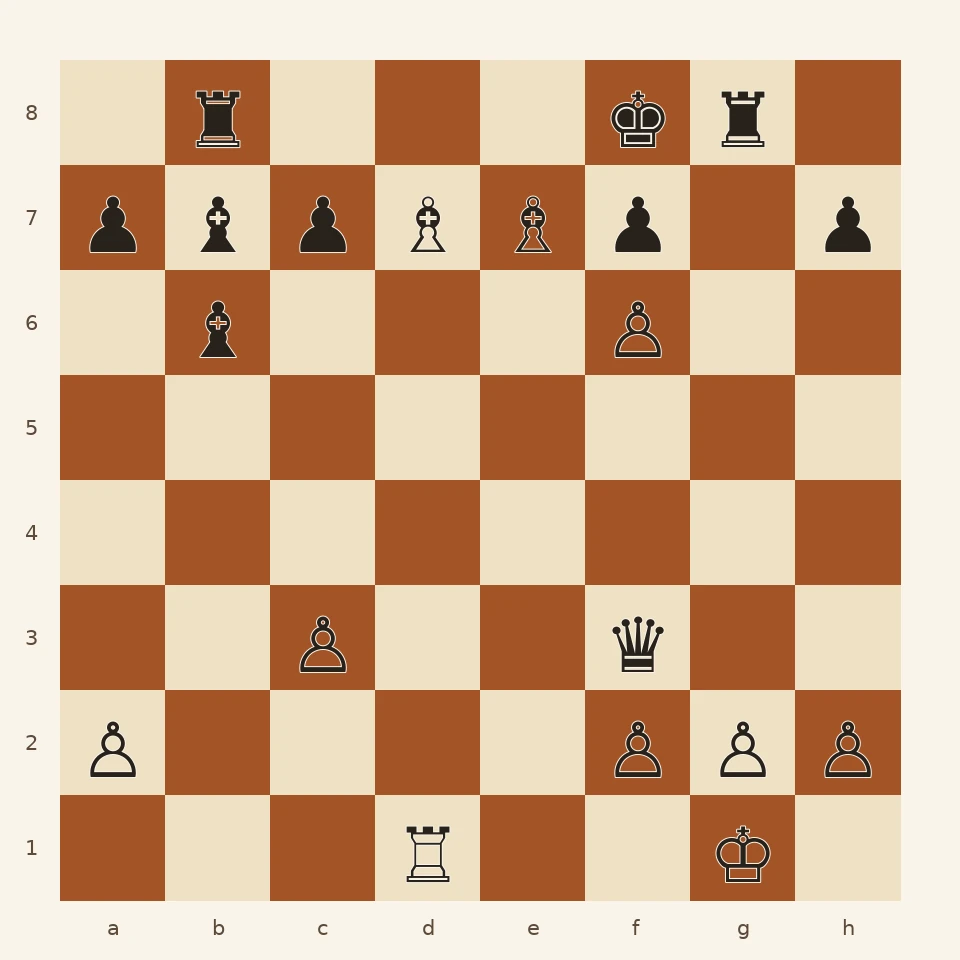
Position 8 · After 24. Bxe7#
The final position
Checkmate
The bishop captures on e7 and gives mate. Black cannot capture it, block the attack, or move the king. This is the exact final position reproduced on the PuzzleWhere shirt.
Complete game
The full score
Evans Gambit, ECO C52 · Anderssen–Dufresne · 1–0
- 1. e4 e5
- 2. Nf3 Nc6
- 3. Bc4 Bc5
- 4. b4 Bxb4
- 5. c3 Ba5
- 6. d4 exd4
- 7. O-O d3
- 8. Qb3 Qf6
- 9. e5 Qg6
- 10. Re1 Nge7
- 11. Ba3 b5
- 12. Qxb5 Rb8
- 13. Qa4 Bb6
- 14. Nbd2 Bb7
- 15. Ne4 Qf5
- 16. Bxd3 Qh5
- 17. Nf6+ gxf6
- 18. exf6 Rg8
- 19. Rad1 Qxf3
- 20. Rxe7+ Nxe7
- 21. Qxd7+ Kxd7
- 22. Bf5+ Ke8
- 23. Bd7+ Kf8
- 24. Bxe7# 1–0
Classic Games No. 1
Wear the position. Ask the question.
The tee presents the authentic final challenge without revealing the move. Its QR code returns players to the puzzle, hint, answer, and this full story.
See the Evergreen Game teeSources & further reading
The move score was cross-checked across multiple records. Historical uncertainty is identified rather than presented as fact.