
September 26, 2026 · 7 min read
Logic Puzzles: What They Are, Where They Came From, and Why We Love Them
A logic puzzle gives you every fact you need and dares you to use them. How they work, a 1,200-year history, three classic puzzles explained, and the logic puzzle we put on a shirt.
A logic puzzle hands you everything you need and then dares you to use it. There's no trivia, no trick spelling, no hidden picture. Just a handful of facts, a few rules, and one answer that has to be true. The pleasure isn't in spotting something — it's in proving something, one careful step at a time, until the only possibility left is the right one.
What is a logic puzzle?
A logic puzzle is a problem you solve by reasoning from the information given, rather than by knowing facts or guessing. If you've read the puzzle, you already know everything required to solve it. What you don't have yet is the chain of steps that connects the clues to the answer.
Most logic puzzles are built from a few familiar ingredients:
- Constraints. Rules that limit what's allowed: the boat holds two, the goat can't be left with the cabbage, each guard answers one question, etc.
- Elimination. Ruling out every possibility that breaks a rule, until one survivor remains. Sherlock Holmes built a career on it.
- Deduction. Combining two facts to produce a third you weren't told. If A is taller than B, and B is taller than C, you now know something about A and C, which is that A is taller than C.
- A twist of perspective. The best ones hide the key step in a place you weren't looking — a question asked sideways, an extra trip backward, a property of the world you forgot you could use, etc. The way something appears can change when viewed from a different perspective.
The word itself ("Logic") comes from the Greek logos — word, reason, account. A logic puzzle asks you to give an account of the answer, not just name it.
A very short history
Around 800 AD, the English scholar Alcuin of York assembled a Latin collection called Propositiones ad Acuendos Juvenes — "Problems to Sharpen the Young." It includes one of the oldest river- crossing puzzles on record - the ancestor of the wolf, goat and cabbage puzzle we still tell today.
Formal logic itself goes back much further, to Aristotle's syllogisms ("All men are mortal; Socrates is a man…"). But puzzles made logic playful. In the 1800s, Lewis Carroll — a mathematician when he wasn't writing about Alice — published The Game of Logic and Symbolic Logic, full of deliberately absurd syllogisms about babies, crocodiles and pigs.
Early 20th-century puzzle masters Henry Dudeney in England and Sam Loyd in America filled newspapers with logic and math problems. Later, logician Raymond Smullyan made the "knights and knaves" puzzle famous — islands where some people always tell the truth and others always lie. Martin Gardner's decades of columns in Scientific American introduced millions of readers to puzzles like these.
Then came the grid. Logic-grid puzzles ("the Norwegian drinks water; the green house is left of the white one…") became a magazine staple, and in the 1980s Japanese publisher Nikoli popularized number-placement puzzles, including the one the world now knows as Sudoku. Today logic puzzles show up in apps, escape rooms and job interviews — and, yes, on shirts.
Three classic logic puzzles, explained
These three have been passed around for decades (one of them for over a thousand years). Try each before reading the answer.
1. The Wolf, the Goat and the Cabbage
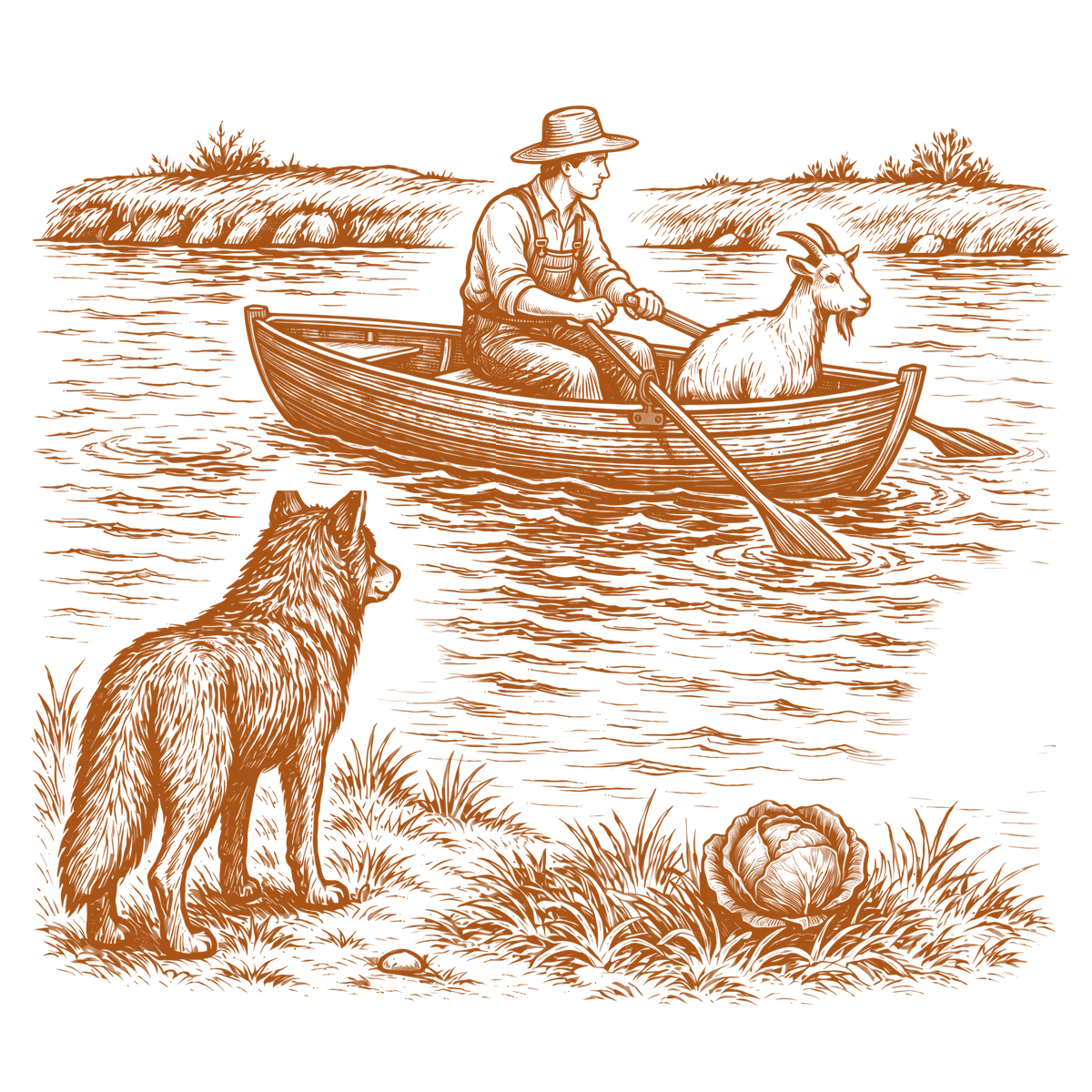
A farmer needs to cross a river with a wolf, a goat and a cabbage. The boat holds the farmer and one item. Left alone, the wolf will eat the goat, and the goat will eat the cabbage. How does everything get across?
Answer explained: Take the goat over first — it's the only item that conflicts with both others. Go back, take the wolf across, and bring the goat back with you. Leave the goat, take the cabbage across to the wolf, then return for the goat. The key move is the backward trip: most people assume every crossing has to make progress. Seven crossings, nothing eaten. See the full puzzle page.
2. Two Doors, Two Guards
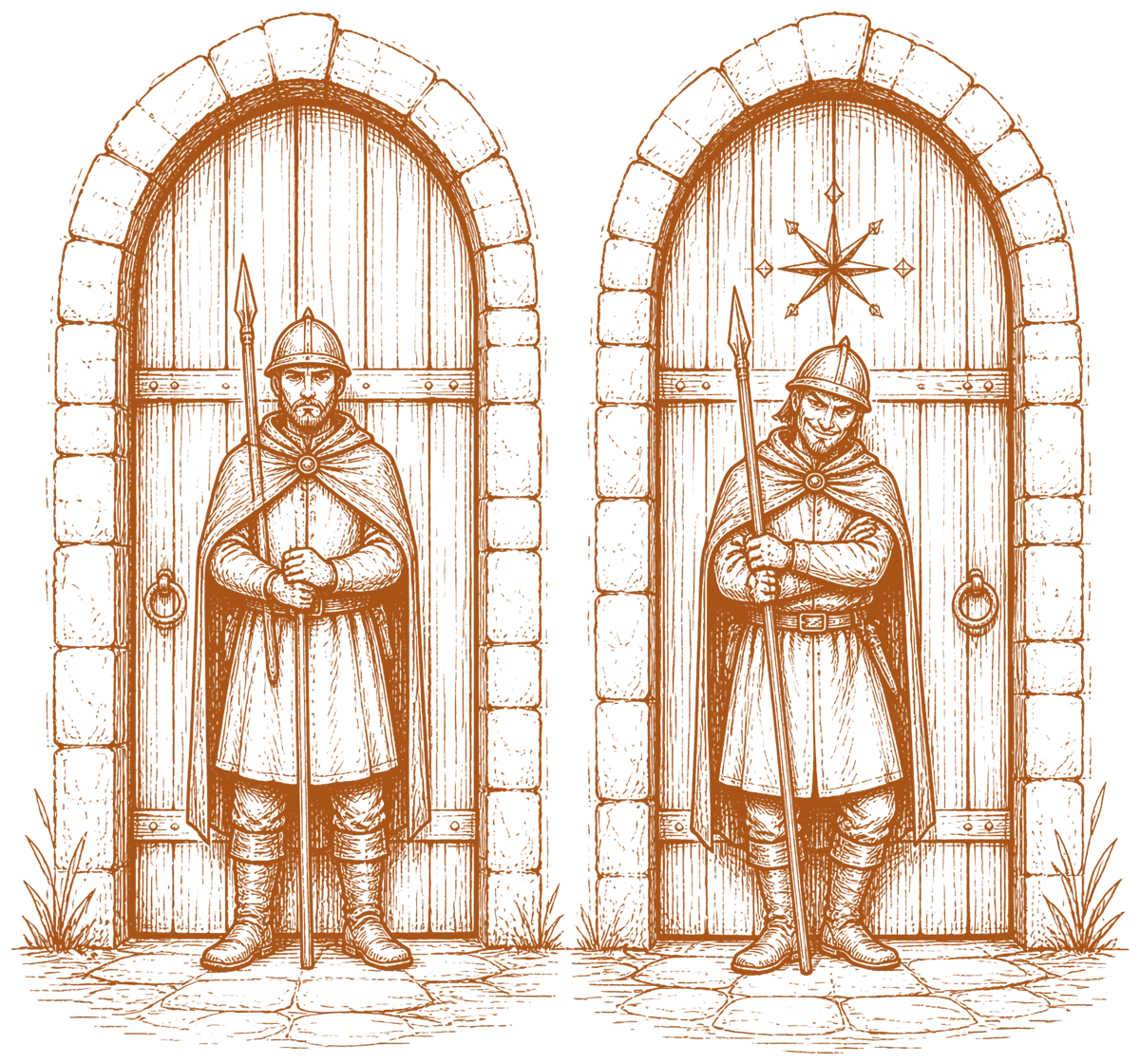
You're in a room with two doors. One leads to freedom, the other to doom. Each door has a guard. One guard always tells the truth, one always lies, and you don't know which is which. You may ask one guard one question. What do you ask?
Answer explained: Ask either guard, "If I asked the other guard which door leads to freedom, what would he say?" Then take the other door. If you asked the truth-teller, he truthfully reports the liar's wrong answer. If you asked the liar, he lies about the truth-teller's right answer. Either way, the answer points to doom. The trick is routing your question through both guards so the truth and the lie cancel out. See the full puzzle page.
3. Three Light Switches

Three switches outside a closed room control three bulbs inside. You can flip the switches as much as you like, but you can open the door only once. How do you figure out which switch controls which bulb?
Answer explained: Turn on switch one and wait a few minutes. Turn it off, turn on switch two, and walk in. The lit bulb belongs to switch two. The dark bulb that's warm belongs to switch one. The dark, cold bulb belongs to switch three. On/off only gives you two states for three bulbs — the solution works because a bulb has a third property you can measure: heat. See the full puzzle page. Of course, this solution only works with heat producing bulbs.
Where logic puzzles show up
- Puzzle books and magazines, from logic grids to Sudoku.
- Classrooms, where teachers use them to build reasoning, patience and math confidence.
- Job interviews, especially in tech and finance, as a quick read on how someone thinks under pressure.
- Escape rooms and treasure hunts, where every lock is a small logic problem.
- Video games, from switch-and-door dungeons to whole games built around deduction.
- Computer science, where puzzles like these are used to teach algorithms and test artificial intelligence.
- Dinner tables, every time someone says, "Okay, here's one for you…"
Who likes them, and why
Logic puzzles attract students, engineers, retirees, chess players, teachers, programmers and anyone who has ever enjoyed arguing a point until it was airtight. They reward a particular kind of stubbornness.
- Everything is fair. The answer is always inside the puzzle. Nobody wins because they happened to know a fact.
- The answer is provable. Unlike a riddle, there's no "well, it could be…" When you're right, you can show exactly why.
- They build real thinking skills. Holding several conditions in your head, testing cases and spotting contradictions are skills that transfer straight into everyday problem solving.
- The aha is earned. A rebus puzzle clicks in an instant. A logic puzzle clicks after you've worked for it, which makes it feel even better.
- They're great conversation. Two people can reach the same answer by completely different routes, and comparing notes is half the fun.
That last point is why we started printing them.
Our logic puzzle: "The Burning Ropes"
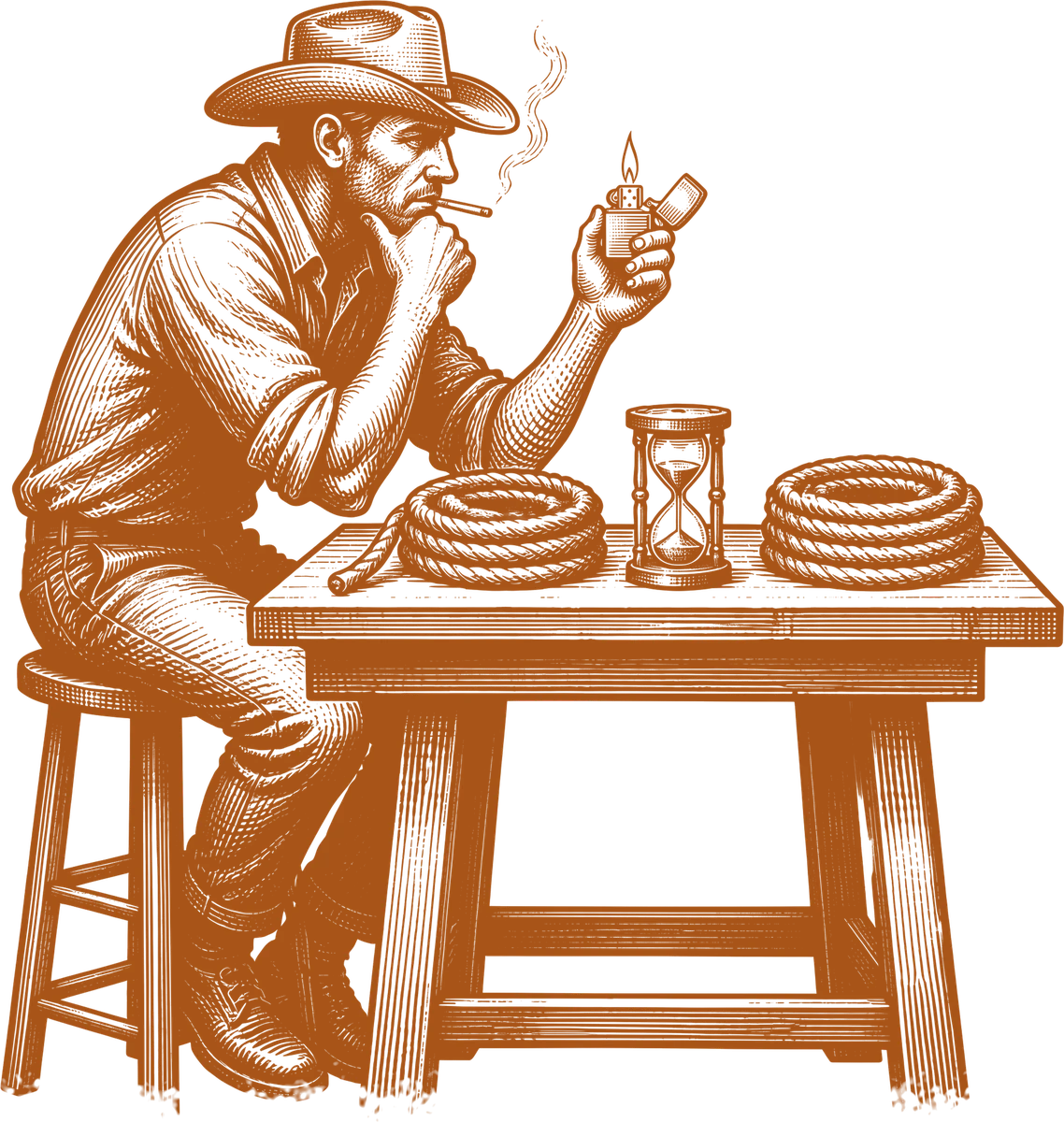
You have two ropes and a lighter. Each rope takes exactly one hour to burn from end to end, but they burn unevenly — half a rope might burn in ten minutes, the rest in fifty. How do you measure exactly 45 minutes?
It's one of our hardest shirts, and it's a favorite because the uneven burning looks like it ruins everything — until you realize what lighting a rope from both ends does. We won't spoil it here. Scan the QR code on the shirt, or try it on the puzzle page, where you can take a hint, reveal the full solution and see how many other people solved it.
Want more? Browse our full collection of logic puzzles you can wear, or read the story of their picture-based cousins in Rebus Puzzles: What They Are, Where They Came From, and Why We Still Love Them.
Get new puzzles?
Get new puzzles and Puzzle Journal posts by email, plus 10% off your first shirt.
No spam. Unsubscribe anytime.